


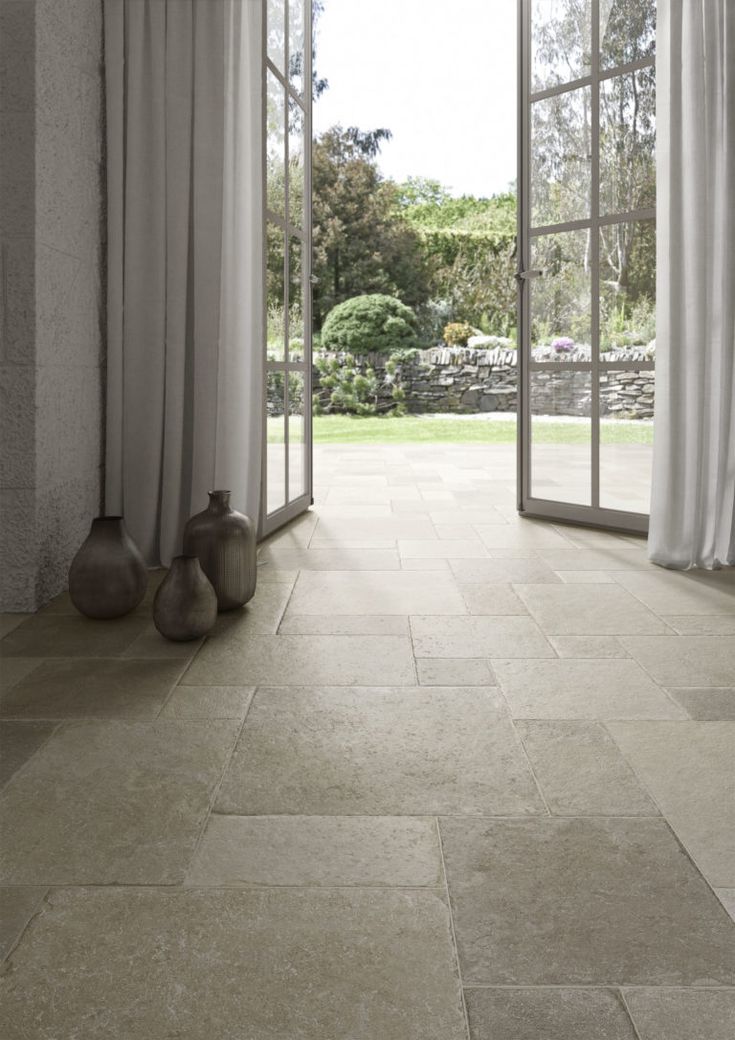
The line between porcelain and ordinary ceramic tile comes down to a single number: 0.5 percent. Under ANSI A137.1, the American standard for ceramic tile, a tile only earns the porcelain name when it absorbs 0.5 percent or less of its weight in water in a lab test, which is what makes porcelain the densest, most water-resistant tile you can buy. That one property, water absorption, drives most of the differences between porcelain, everyday ceramic, and natural stone, and along a humid, sandy coast it matters more than the look that first catches your eye in the showroom.
Porcelain, ceramic, and natural stone all make excellent floors, and choosing between them is a matter of matching the material to the room and to the coast. We stock all three at our Conway showroom, so here is how they actually compare on the numbers that decide how a floor holds up: water absorption, wear rating, wet slip resistance, hardness, and the sealing each one needs.
What's the Difference Between Porcelain and Ceramic Tile?
Porcelain and ceramic are both fired clay, and the real difference is density, measured as water absorption. ANSI A137.1 sorts the whole category by how much water a tile drinks: porcelain, the impervious class, sits at 0.5 percent or less; vitreous tile absorbs 0.5 to 3 percent; semi-vitreous runs 3 to 7 percent; and non-vitreous soaks up more than 7 percent. The test behind those numbers is ASTM C373, a standardized soak-and-weigh method, so a porcelain rating is a laboratory result and not a label a marketer can simply apply.
What that density buys you is resistance to water, frost, and wear. A porcelain tile barely absorbs moisture, so it shrugs off wet mopping, bathroom splashes, and the damp coastal air, and it's dense enough to take heavy traffic without chipping at the surface. Non-porcelain ceramic is a little softer and thirstier, which is perfectly fine on walls, backsplashes, and lighter-traffic floors, and usually easier on the budget. The practical rule is that the wetter and busier the floor, the more the porcelain end of the scale earns its keep.
How Is Natural Stone Different From Porcelain and Ceramic?
Natural stone is quarried rather than manufactured, so its performance is set by geology instead of a factory spec, and it varies from one stone to the next. Granite is a hard, dense siliceous stone that lands around 6 to 7 on the Mohs hardness scale, the standard mineral-hardness ruler, while marble and travertine are calcareous stones that sit near 3 to 4 and scratch and etch far more easily. Porosity varies just as much: marble typically absorbs only about 0.5 to 2 percent of its weight in water, while travertine, riddled with natural voids, can run anywhere from 5 to 20 percent.
The spread from hard granite to soft marble is the whole story with stone. A dense granite behaves a lot like porcelain underfoot, whereas a soft, porous marble or travertine is a beautiful floor that demands more care, more sealing, and more caution about what you clean it with. Stone also brings something no manufactured tile can copy, since every piece is one of a kind, and for many homeowners that character is worth the extra maintenance. The key is going in knowing which stone you're choosing and what it will ask of you.
Porcelain vs. Ceramic vs. Natural Stone at a Glance
| Property | Porcelain | Ceramic (non-porcelain) | Natural stone |
|---|---|---|---|
| Water absorption (ANSI A137.1) | 0.5% or less | 0.5% to over 7% | Marble ~0.5-2%, travertine 5-20% |
| Hardness / wear | Very high; rated by PEI | High on the surface; rated by PEI | Granite hard (Mohs 6-7); marble soft (3-4) |
| Sealing | None needed | None needed | Often needed; more for calcareous stone |
| Acid sensitivity | None | None | Marble and travertine etch with acids |
| Best coastal use | Anywhere, wet or dry | Walls, backsplashes, light floors | Feature floors and baths, with care |
What Do PEI Ratings Mean, and Which Do You Need?
A PEI rating tells you how much foot traffic a glazed tile's surface can take before it starts to show wear. The number comes from the ISO 10545-7 abrasion test, which spins an abrasive load across the glaze and counts how long it lasts, and the results fall on a scale from 0 to 5. PEI 0 is wall-only, PEI 1 and 2 suit light-traffic rooms, PEI 3 handles every room in a normal house including kitchens and hallways, and PEI 4 adds light commercial duty for a busy household with kids and pets.
For most homes, PEI 3 is the floor to clear and PEI 4 is the safer bet in the hardest-working rooms. The rating only applies to glazed tiles, since full-body porcelain wears its color all the way through and is judged on other measures. When you're comparing tiles at the showroom, the PEI number turns an abstract question about durability into a simple check: a PEI 4 entry tile will outlast a PEI 2 one in a house full of sand and traffic, every time.
Which Tile Is Safest on a Wet Floor?
Slip resistance on a wet floor is measured, and the number to look for is a DCOF of at least 0.42. DCOF stands for dynamic coefficient of friction, a lab measure of how much grip a floor offers underfoot, and the Tile Council of North America (TCNA), the body that writes the U.S. tile standards, sets 0.42 as the minimum under ANSI A326.3 for any tile meant to be walked on when wet. Below that number a floor gets slick as soon as it's wet; at or above it, the tile has enough traction for entries, bathrooms, and kitchens.
On the coast this number does real work. Sand tracked in from the beach, wet feet from the pool, and damp air all make a slick tile a genuine hazard, especially in a home with older residents. A high-gloss, low-DCOF tile can look stunning and be the wrong choice for an entry or a bathroom floor. When you tell us where a tile is going, we steer you toward the ones that clear 0.42 for the wet rooms and let the glossier options live where they stay dry.
How Coastal Humidity and Sand Change the Choice on the Grand Strand
A humid, sandy coast rewards low water absorption and slip resistance, which pushes most Grand Strand floors toward porcelain. Myrtle Beach averages about 73 percent relative humidity across the year and climbs near 85 percent on summer mornings, so tile here lives in damp air and gets wet often. Porcelain's near-zero water absorption, that 0.5 percent ceiling, means moisture never gets into the tile body, so there's nothing for frost, mildew, or salt air to work on over the years. Its hardness stands up to the sand that gets tracked in from the beach and acts like sandpaper on softer surfaces, grinding away at a glaze or dulling a polished stone one footstep at a time. For a floor that meets water and grit every day, those two properties do more for how it ages than any style choice.
Natural stone still has a place in a coastal home, as long as the choice fits the exposure. A dense granite handles a busy kitchen well, while a soft marble is happier as a feature in a powder room than as a main-traffic floor that meets sand and acidic spills every day. The coast doesn't rule stone out, it just raises the price of choosing the wrong one, so the sealing and cleaning routine has to be part of the decision rather than an afterthought.
Sealing and Care: What Each Material Needs
Porcelain and ceramic need no sealing, while natural stone usually does, and the two demand very different cleaning. Because porcelain and glazed ceramic don't absorb water, they never need a sealer and they tolerate ordinary tile cleaners; the grout between them is the only part that benefits from sealing. Natural stone is the opposite. The Natural Stone Institute, the trade association that publishes the industry's care standards, is clear that sealing a stone makes it more stain resistant rather than stain proof, and that many stones don't strictly need sealing at all.
The bigger care rule for stone is what you clean it with. The same institute warns that lemon, vinegar, and other acids will dull or etch calcareous stones like marble and travertine, so those floors want a neutral cleaner made for stone instead of a vinegar-and-water mix or a general household spray. As a rough guide, calcareous stones tend to want resealing every year or two while a dense granite can go several years, though the real interval depends on the sealer and how hard the floor works. If you'd rather not think about any of that, porcelain that looks like marble gives you the veined stone look with none of the sealing schedule.
Which Tile Should You Choose for Each Room?
The best tile depends on the room's traffic and how wet it gets. In entries, kitchens, mudrooms, and any floor that meets sand and water, porcelain rated PEI 3 or higher and clearing a 0.42 wet DCOF is the workhorse choice. In bathrooms and laundry rooms, the same porcelain logic applies, with slip resistance moving to the top of the list. Backsplashes and walls open the door to prettier, softer ceramic and to decorative stone, since a vertical surface takes no traffic and stays dry.
Natural stone shines as a statement. A polished marble entry, a travertine sunroom, or a slate accent can carry a room in a way manufactured tile cannot, provided you accept the care it needs and keep it out of the harshest spots. When you're deciding, it helps to see the options side by side, so you can browse the porcelain and ceramic in our tile catalog and the marble, travertine, and granite in our natural stone selection, and our guide to tile flooring lays out the material choices in plain terms.
Questions We Get About Choosing Tile
Is porcelain always better than ceramic?
No, porcelain is denser and more water-resistant, but that doesn't make it the right pick everywhere. Non-porcelain ceramic is a sound, often more affordable choice for walls, backsplashes, and lighter-traffic floors that stay reasonably dry. The advantage of porcelain shows up in wet, high-traffic areas, where its near-zero water absorption and hardness pay off.
Does natural stone flooring need a lot of maintenance?
Some stones do and some don't, depending on the type. A dense granite needs little beyond neutral-cleaner mopping and occasional sealing, while a soft, porous marble or travertine wants more frequent sealing and real care about acidic spills. Choosing a stone that matches how you'll use the room is what keeps maintenance reasonable.
What does a good DCOF number mean for my bathroom?
A tile with a wet DCOF of 0.42 or higher has the traction to be reasonably safe on a wet bathroom floor. Below that, a floor can turn slick the moment it gets splashed, which matters most in bathrooms and entries. Ask for the DCOF when you pick a tile for any room that gets wet, and lean higher for a home with young children or older adults.
Can I get the look of marble without the upkeep?
Yes, porcelain tile printed to look like marble gives you the veined stone appearance with none of the sealing or acid sensitivity. Modern porcelain reproduces stone convincingly, right down to the texture, and it carries porcelain's water resistance and hardness. It's a common choice on the coast for exactly that reason.
Find the Right Tile for Your Conway Home
The best tile for your home is the one whose numbers match the room, and matching water absorption, PEI rating, and wet slip resistance to how each space is used is the difference between a floor that lasts decades and one that disappoints. When you're ready to choose, request a free in-home estimate and we'll bring samples, talk through porcelain, ceramic, and natural stone for your rooms, and help you land on tile built for coastal living. Bring us the space and we'll bring the material that fits it.


