


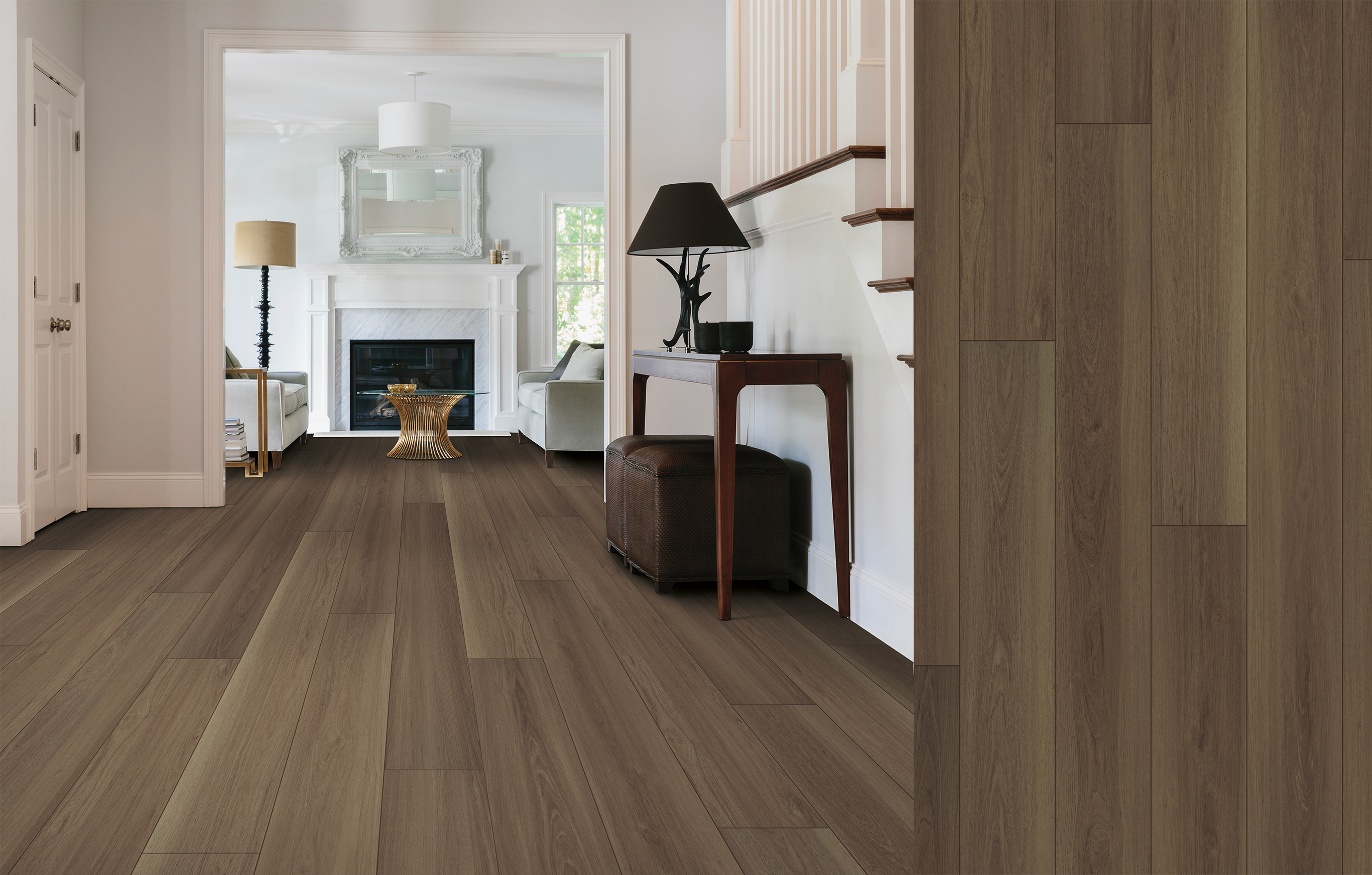
Every flooring market in the country has its own nemesis. Up north it is rock salt and winter slush; out in the desert it is dust; here on the Waccamaw side of the Grand Strand, it is the very thing people move here for. Sand is the region’s signature and its slowest-moving home-maintenance problem: a mineral abrasive, mostly quartz, that arrives daily by shoe, paw, towel, and toddler, then spends years quietly grinding against whatever surface it lands on. No single product on any showroom floor “solves” it outright. But a house strategy — the right materials in the right rooms, finishes that hide what they cannot prevent, and three or four cheap habits — reduces sand from an adversary to a rumor.
That strategy is what this guide builds. Waccamaw Floor Covering has been outfitting homes against this exact opponent since 1986, from a Conway showroom that stocks every weapon in the armory — tile, luxury vinyl, laminate, hardwood, and carpet — plus the installation and maintenance services that make the plan stick. We will examine what actually rides in on each kind of foot, total up a year of abrasion under different habits, and show why finish choice is the cheapest insurance in flooring.
Know Your Couriers: The Tread Forensics Lab
Sand does not walk in on its own — it books passage. Each kind of foot in a Grand Strand household is a different delivery service with different cargo and a different drop-off pattern. Examine the evidence:
The flip-flop
- Cargo
- Loose dry sand riding the footbed and the foot itself — the highest-volume courier per step in summer.
- Drop pattern
- Sheds early and everywhere — a sandy trail from door to kitchen in fifteen steps.
- Countermeasure
- The outside shake-off plus a shoes-off basket by the door. Cheapest fix in this entire article.
A Year of Grinding: Spin the Abrasion Odometer
Single sandy footsteps are harmless; the coast’s weapon is accumulation. Think of every gritty step on a floor as one tiny pass of fine sandpaper — meaningless alone, meaningful by the tens of thousands. Set your household’s honest habits below and watch the annual odometer:
Full exposure: the floor eats nearly every grain the couriers deliver. At this volume, finish dulling in traffic lanes becomes a when, not an if — material choice has to do all the work alone.
The Flashlight Test: Why Sheen Is Sand Insurance
Whatever gets past your defenses will eventually leave micro-marks — on any material softer than quartz. Whether you ever see them is a separate decision, and it is made at the showroom: sheen. Glossy surfaces bounce light coherently, so every micro-scratch interrupts the mirror and announces itself. Matte surfaces scatter light everywhere to begin with — the same marks simply vanish into the noise. Sweep the light:
Press the button and watch what raking light reveals — and what it cannot.
The Armory: Matching Material to Battlefield
With couriers profiled, exposure totaled, and camouflage chosen, the material decisions almost make themselves. Porcelain tile is the only common surface that out-hardens quartz outright — the undisputed pick for entries, baths, and the door-to-kitchen corridor; our porcelain collection is nearly 150 lines deep for exactly that reason. Waterproof luxury vinyl brings tough wear layers, water indifference, and wood looks across whole main levels — the modern coastal default, with 85 waterproof lines in our luxury vinyl catalog; spec the heavier wear layers for sandy traffic. Laminate counters with outstanding scratch resistance per dollar — its fused surface ranks among the most abrasion-resistant in flooring — and today’s waterproof laminate options retire its old weakness; the fundamentals live in our laminate overview. Hardwood remains the room-warming aristocrat — managed honestly: mats, finishes in matte tones, rugs in lanes, and species/format guidance like our deep dive on engineered white oak for coastal homes; browse 227 oak lines in the oak collection. Carpet retreats upstairs and into bedrooms, low and dense — the full coastal-carpet doctrine deserves its own article, and the rooms it wins, it wins completely.
The pattern across every well-defended house we have floored since 1986 is zoning: hard-fired or hard-wearing surfaces along the sand corridor, comfort materials in the retreat rooms, and transitions planned by installers who do this daily — trim, stair noses, and transition strips are all named services here, because a strategy is only as good as its seams.
Seasonal Intelligence: The Sand Calendar
Sand pressure is not constant — it runs a calendar, and the defense can too. High summer is the siege: beach trips daily, guests weekly, flip-flop traffic at maximum; this is when the airlock earns its budget, the vacuum schedule learns new words, and the shoes-off basket stops being optional. Shoulder seasons bring the locals’ beach months — gentler volume, but golf season’s cleats and garden grit substitute in. Winter is the recovery window: traffic thins, and it is the smart season for the deeper resets — professional carpet cleaning after the sandy year, the maintenance consultation, the repair appointments for whatever summer wrote, and honestly the best window for installation projects themselves, when rooms can be emptied without disrupting guest season. Households that sync with this calendar — fortify before Memorial Day, reset after Labor Day, renovate in the quiet — spend less on floors per decade than households that treat every month identically. It is the same logic coastal homeowners already apply to HVAC and hurricanes, finally applied to the surface everything walks on.
The Two-Address Reality: Primary Homes vs. Beach Places
Our service area splits between people who live here and people whose house lives here — and sand strategy differs by which one is yours. Full-time homes get the complete playbook above: habits compound when someone is present daily to run them. Part-time and getaway places need the strategy weighted toward materials over habits, because nobody runs a vacuum schedule from three states away: harder surfaces across more of the plan, fired tile and heavy-wear-layer vinyl doing the unattended months, carpet held to the bedrooms that host actual sleep, and finishes chosen entirely from the camouflage trifecta since cleaning happens in bursts between visits. The arrival-day experience is the design brief — a floor that looks composed after six empty weeks plus one sandy weekend. It is a brief our showroom hears weekly, and the material mix it produces (more porcelain, more waterproof plank, less wishful softness) is one of the most reliable patterns in four decades of area installs.
Build Your Defense in One Visit
This whole article compresses into a showroom hour. Bring your floor plan (or just your phone photos), and the conversation runs: which doors face the sand, which rooms host the chaos, which materials hold those lines, and which finishes keep the survivors invisible. Check in-stock specials for ready-now value, use the visualizer to preview camouflage candidates in your actual rooms, and order free shipped samples for the afternoon-light audition. Then the free in-home consultation turns strategy into measurements and an estimate as soon as the next business day (some exclusions apply) — with financing available and delivery on the services list. We hold the line for Conway, Myrtle Beach, North Myrtle Beach, Carolina Forest, Murrells Inlet, Georgetown, Aynor, Loris, and Galivants Ferry.
Designing the Airlock: Entry Architecture That Works
Spacecraft do not let space inside; well-designed beach houses do not let the beach inside — both rely on an airlock, and yours is the fifteen feet around each exterior door. The architecture has four stations. Outside the door: a coarse scraper surface — the sacrificial first defense that takes the heavy payload. Inside the door: a genuine walk-off mat, long enough for two full strides, because one shoe-tap removes almost nothing and six steps remove most things. The landing zone: a hard, fired, or sealed surface — porcelain being the local valedictorian — sized to host the shoe basket, the towel hook, and the sandy-gear staging area that summer demands. The threshold to soft country: the planned transition where hard surface hands off to carpet or wood, executed with proper strips and height management — named services on our installation menu, because an airlock leaks at its seams. Households that build all four stations report something close to magic: the rest of the house simply stops being sandy, and the flooring everywhere else gets to age on its own merits.
Size the Airlock: The Mat Coverage Planner
The airlock above is a design; this turns it into a shopping list. The working rule: outside each door, a coarse scraper mat roughly the door’s width; inside, a walk-off runner long enough for two full strides — about six feet — because one polite shoe-tap removes almost nothing and six honest steps remove most of the payload. Enter your house:
The Equipment Room: Tools That Actually Move the Needle
Strategy needs logistics, so here is the honest equipment review. The vacuum matters more than its price tag suggests: strong suction with a brush action appropriate to each surface — agitation for carpet lanes, soft-roller or hard-floor mode for planks and tile so the machine is not itself dragging grit across the finish. Slow passes beat fast ones; the deep grains surrender reluctantly. The dry dust mop is the hard floor’s daily friend — thirty seconds down the corridor intercepts the day’s delivery before feet grind it in. The damp mop finishes weekly with a cleaner matched to the floor (neutral pH as the default; never wax or oil soaps on products that do not ask for them). And the humble mat-washing routine — shaking outside, machine-washing monthly — keeps the defense layer from becoming a sand reservoir itself. Total daily time across all of it: under five minutes. The odometer above already showed you what those five minutes buy.
If You Love Wood Anyway: The Hardwood Owner’s Protocol
Plenty of Grand Strand homeowners read the tournament results and choose hardwood anyway — for warmth, for resale gravity, for the way oak takes evening light — and that is a fully defensible choice with the protocol. Choose wisely at purchase: harder species and engineered formats suited to coastal humidity (our deep dive on engineered white oak as the coastal hardwood covers the why), in matte, lower-sheen finishes with texture — wire-brushed surfaces are sand’s least favorite canvas. Deploy tactically: wood in the living, dining, and bedroom zones; fired or resilient surfaces holding the entry corridor. Defend daily: the airlock above, felt pads under every furniture foot, rugs with proper pads in the traffic lanes, and the dust-mop habit. And accept the long game gracefully — wood is the one floor whose wear story has a happy final chapter, because a quality hardwood can be renewed where others are replaced. Wood at the beach is not a mistake; unprotected wood in the sand corridor is. Browse the oak collection with the protocol in mind and the romance survives contact with reality.
Already Worn? The Repair-First Paths
If sand has already written a few chapters on your floors, replacement is not the only pen. Match the symptom to the path: carpet lanes crushed or rippled — carpet stretching and repair re-tensions and rescues; a cracked or damaged tile — tile repair and replacement swaps the casualty (this is why we preach keeping overage boxes); dulled traffic paths on hard surfaces — sometimes a maintenance reset (deep clean, polish appropriate to the product) revives more than expected, which is what floor maintenance and care consultations diagnose; localized damage near doors — partial replacement of a zone, paired with a proper airlock so history does not repeat. And when water has joined sand in the damage story, emergency flooring repair is on the same services menu. The pattern: an honest dealer’s first instinct is triage, not invoice — repair what repairs, replace what earned it, and fix the strategic hole that caused the wear. Four decades of follow-up service is exactly what keeps that instinct honest.
The Whole-House Sand Map, Narrated
Walk the strategy through a typical raised Grand Strand home, door to bedroom. The garage or carport entry — the golf-cart-and-beach-wagon gateway — wants the toughest, most washable surface in the plan (sealed or fired; this is also where a coated floor shines, a topic our services list covers under decorative coating). The main entry and hallway corridor: porcelain or heavy-wear-layer waterproof vinyl, mid-tone, matte, textured — the camouflage trifecta on the hardest-working path. The kitchen and gathering floor: continue the corridor surface for seamless flow, or hand off to wood-look planks where the sand pressure thins. The laundry and baths: fired surfaces, no debate. The stairs: carpet’s stronghold — traction and hush where they matter most. The bedrooms: the soft reward — dense carpet in forgiving tones, defended by everything downstream of the airlock. Sketch your own floor plan against that narration and the shopping list writes itself — and the free in-home consultation turns the sketch into measured, sequenced, installed reality.
Sand-Strategy Questions, Answered
Is there a truly sand-proof floor?
Which single habit matters most?
Do beach-area floors need replacing more often?
What about the salt air everyone mentions?
Can you assess what my current floors need?
Where do I start?
The Strategy on One Index Card
Everything above compresses to something you could tape inside a kitchen cabinet. Know the couriers: flip-flops shed early, golf shoes dump in clumps, paws distribute randomly, sneakers grind daily lanes. Build the airlock: scraper outside, two-stride mat inside, hard landing zone, planned transition to soft country. Zone the materials: fired or heavy-wear surfaces on the sand corridor — entry, hall, kitchen, laundry — comfort materials upstairs and behind bedroom doors. Choose camouflage: matte sheen, mid-tone color, visual texture — the trifecta that hides what the defense misses. Run the habits: shoes off mostly, mats washed monthly, grit evacuated weekly — remembering they multiply, as the odometer proved. Repair early: stretching, tile swaps, and maintenance resets cost a fraction of the replacements they prevent. Six lines, four decades of local pattern recognition behind them, and every line maps to a product aisle or a named service at one Conway address. That is the whole secret: the beach is not going anywhere, and with this card, neither are your floors.
Live Near the Beach. Stop Flooring Like You Don’t.
A last word on perspective, because flooring anxiety is not what living here should feel like. Nobody moves to the Waccamaw country or the Grand Strand to think about their floors — they move for the river mornings, the beach afternoons, the golf, the porches, the pace. The entire purpose of a sand strategy is to buy that life back: to make the floors so well-matched to the place that they stop demanding attention at all. An hour at a showroom, a few well-placed materials, four cheap habits — that is the entire toll, paid once, for floors that let the beach be a joy instead of an invoice.
Sand is the tax on paradise, but it is a negotiable one. Profile the couriers, mat the doors, zone the materials, choose the camouflage — and the Grand Strand’s slowest home-maintenance problem becomes a non-story told on floors that still look new. That is the playbook four decades of Conway flooring has written, and it is yours for the borrowing. See the projects in our work, read the reviews, and bring us your front door’s worst week.
The whole anti-sand armory, under one Conway roof since 1986.
Request Your Free Estimate


