


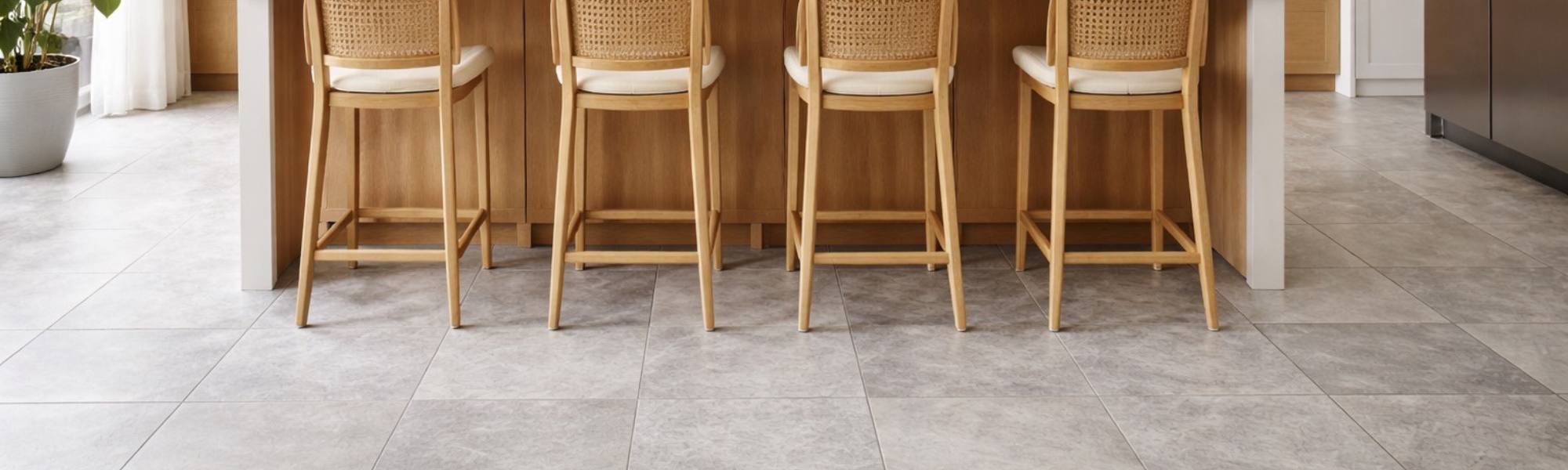
There is a reason the world’s warm, sandy places — the Mediterranean coasts, the Gulf, the islands — figured out tile centuries before air conditioning existed, and it is the same reason tile keeps winning floors across the Grand Strand today: tile is the one flooring category that treats our environment as a non-event. Sand cannot scratch its way through a fired porcelain surface the way it works on softer floors. Humidity swings that make organic materials sulk leave tile entirely unmoved. Water — tracked, spilled, dripped, or blown in sideways by a July thunderstorm — is a mop pass, not an incident report. And on a ninety-degree August afternoon, with the air conditioner doing its noble work, a tile floor remains quietly and dependably the coolest thing in the entire house.
Waccamaw Floor Covering has been selecting and installing tile across Conway, Myrtle Beach, and the surrounding beach communities continuously since 1986, with a tile catalog that runs from classic ceramic to nearly a hundred and fifty porcelain lines and a services menu that covers everything underneath and around the tile itself — subfloor preparation, layout planning, repair, even radiant heat installation for the homeowners who want winter mornings warmed from below. This guide is the showroom conversation in long form, tool by tool: which tile earns which room and where it merely passes, how to think clearly about traction in a climate where wet floors are weekly weather, why sand loses this particular materials fight every single time, and the layout-and-grout decisions that quietly separate fine tile installations from forgettable ones.
Report Cards: How Tile Grades Out, Room by Room
Tile is not equally brilliant everywhere — it earns different marks in different rooms, and an honest dealer hands you the whole report card. Pick a room:
Entry & Mudroom
Kitchen
Sunroom / Carolina Room
Bedrooms
The Wet-Floor Question: Take the Tilt Test
The fair knock on tile in a wet climate is traction — and the answer is that traction is a finish you choose, not a fate you accept. Glaze and texture decide how a tile behaves underfoot when water arrives. Tilt the ramp:
Pick a finish and watch the sneaker’s verdict.
Sand vs. Surfaces: The Scratch Tournament
Here is the materials-science heart of why tile owns sandy markets. Beach sand is mostly quartz — one of the harder common minerals underfoot anywhere. Scratching is a hardness contest: the harder material wins, every time, no appeals. Play the bracket:
Match 1
Match 2
Match 3
Match 4 — the final
Tournament summary: against the Grand Strand’s signature abrasive, fired surfaces are the only undefeated league. It is the quiet reason “tile the working floors” is four-decade-old local wisdom.
Porcelain or Ceramic: The Five-Minute Version
Both are fired clay; the difference is intensity. Porcelain is the denser, harder, lower-absorption evolution — rated for floors and heavy service, happy in every room and at every door. Today’s printing makes porcelain a convincing impressionist too: wood-plank looks, marble looks, concrete looks, all with fired-surface physics. Ceramic trades some density for friendlier pricing and a vast glaze tradition — superb on walls, backsplashes, and lighter-duty floors. The practical Grand Strand pattern: porcelain underfoot, ceramic on the vertical surfaces, and natural stone or glass where a moment of luxury earns its keep. Deeper category fundamentals live in our tile overview.
What Separates a Fine Tile Job from a Forgettable One
Tile is permanent the way few purchases are — which makes the installation craft the actual product. Four things our crews sweat that no product page mentions. The substrate: tile demands flat, stable, properly prepared floors; subfloor repair and preparation and floor leveling are named Waccamaw services because coastal homes — raised, slab, old, new — arrive in every condition. The layout: where the first tile goes decides whether you end at walls with grace or slivers; plank-format tile adds direction and offset decisions; our design and layout planning service settles these before mortar opens. The grout: color close to the tile recedes, contrast declares the grid — both are legitimate, only one is right for your room — and modern grout technology has made maintenance dramatically friendlier than the grout of your childhood. The transitions: where tile meets carpet, vinyl, or wood, height and trim details are planned, not improvised — stair nose and transition strip installation is, literally, on the services list.
And two upgrades worth knowing exist: radiant heat flooring installation — the cool-in-summer floor that warms its act up for our short winters — and tile repair and replacement for the day a meteorite (or a cast-iron skillet) finds one tile. Keeping a few spare tiles from your install in the garage makes that day a footnote; ask us about overage at ordering time.
Wood-Look Porcelain: The Coastal Cheat Code
If one product category explains tile’s surge across Grand Strand main levels, it is the wood-look plank: porcelain printed and textured to read as oak, hickory, or driftwood pine, fired into the same quartz-beating surface the tournament above crowned. The appeal is almost unfairly complete — the warmth and grain of wood for the eyes, with sand immunity, water indifference, and zero humidity opinions for the physics. Beach houses get the driftwood aesthetic that actually survives the beach; traditional Conway homes get oak looks that never cup, gap, or fade. The craft notes that make it convincing: longer planks with generous pattern variation (so repeats hide), tight rectified edges with grout matched to the plank’s body tone (so joints recede toward wood-floor seams), and an offset layout planned the way wood would be laid. Done well — and layout is where our installers earn the compliment — visitors routinely have to crouch and touch it. The lines live throughout our porcelain collection, and the visualizer will happily preview a driftwood floor in your actual living room photo.
Formats and Layouts That Flatter Strand Homes
Tile’s size menu has exploded, and format choice now shapes a room as much as color. Large-format squares and rectangles — the modern default — mean fewer grout lines and a calmer, bigger-feeling floor, a gift to open coastal plans; they also demand the flatness prep our leveling service exists for. Plank formats bring direction: run them toward the view (and here, there is usually a view) to stretch rooms toward the light. Classic squares at modest sizes keep cottage and traditional interiors honest. Mosaics concentrate on service zones — shower pans, niche accents, laundry splash — where their grout-rich texture adds grip and charm. Layout multiplies the options: straight-set for serenity, offset for wood-like rhythm, herringbone where a foyer wants a moment. None of these costs much more than its plain sibling at material time; all of them are forever once set — which is why custom flooring design and layout planning is a named service here rather than a clipboard afterthought.
Grout Grew Up: A Short Modern History
Every tile skeptic carries a grout grudge from some previous decade — the white lines that grayed, the scrubbing, the resealing. Fair grudge, outdated facts. Modern grout chemistry has quietly transformed the maintenance story: today’s high-performance and stain-resistant formulations hold color dramatically better, resist the mildew dance, and in several families never need sealing at all. Color strategy finishes the job: the contemporary default is grout matched within a shade of the tile’s body, which hides wear, dirt, and time far better than the old bright-white grid — and visually upgrades the whole floor to a calmer, more expensive read. Joint widths have slimmed too, with rectified tiles taking tight lines that minimize grout’s share of the floor altogether. Translation for your project: pick the tile you love, then give the grout conversation ten respectful minutes at our counter — the right call there is the difference between a floor you maintain and a floor you merely sweep.
The Porch Question: Tile Toward the Outdoors
Indoor-outdoor living is the Grand Strand’s house style — sunrooms, Carolina rooms, screened porches, and patios blur the line all year — and tile is the flooring family most willing to follow you across it. The rules of the crossing: outdoor-rated porcelain handles the exposure, slip resistance graduates from a preference to a requirement on surfaces that meet weather, and substrate prep (slopes, drainage, movement joints) becomes even more decisive than indoors. Done right, a porcelain sunroom floor that visually continues toward the patio makes both rooms feel larger and the house feel designed. Our team has guided plenty of these transitions — and for the fully outdoor leg of the journey, our earlier piece on natural stone for outdoor patio areas covers the stone side of the same instinct. Bring the whole indoor-outdoor plan to one consultation; the materials, slopes, and transitions plan best as a single thought.
Where the Money Goes in a Tile Project
Tile quotes puzzle first-time buyers because the tile itself is often the smaller line. The anatomy, honestly: materials (tile, setting mortar, grout, trim and edge profiles, plus sensible overage for cuts and future repairs); preparation (the flatness, repair, and substrate work from our services list — the line that decides whether everything above it lasts); labor and layout (the craft hours that turn boxes into a composition — patterns, offsets, and mosaics price by complexity); and the edges (transitions, stair noses, thresholds — small parts, outsized finish impact). A suspiciously low bid usually deleted the second line, and the floor will re-invoice you for it later in cracked grout and hollow clicks. Our estimates itemize so you can compare like with like — and financing plus payment options can spread a whole-floor project sensibly. Smart shopper’s bonus: ask about overage and keep the spare box; with tile repair and replacement on our services menu, that box is your decade of insurance.
Living on Tile: The Comfort Counterplays
Honesty demands we spend a section on tile’s C grades — hardness and acoustics — because both have mature counterplays. Underfoot fatigue in the kitchen yields to the classic anti-fatigue mat at sink and stove, and to the simple habit of house shoes that half the world’s tile-floored cultures consider obvious. Echo — the liveliness big tiled rooms can develop — yields to the soft layer: area rugs anchoring the seating zone, drapery, upholstered furniture; an open-plan tile floor with one generous rug is acoustically a different room. Dropped-object honesty stays honest — tile wins, glassware loses — but spare-box insurance (that overage carton in the garage) turns the rare cracked tile from a renovation into an appointment, since tile repair and replacement is a named service here. And for the barefoot-comfort maximalists, the radiant heat option converts tile’s one winter demerit into its most luxurious feature. None of these counterplays is expensive; together they retire essentially every lived-in objection the category carries, leaving the A-plus column — sand, water, sun, summers — standing alone.
Reading a Tile Spec Like Our Counter Staff
Tile shopping accelerates once you know which four lines of the spec sheet do the deciding. Material class — porcelain versus ceramic — sets the duty rating, as the tournament showed. Surface finish — polished, satin, matte, textured — sets the traction story, as the tilt test demonstrated, and doubles as the camouflage decision in a sandy market. Wear suitability — manufacturers rate tiles for the traffic class they can face, from wall-only decoratives to commercial-grade floors; matching the rating to the room is a ten-second check that prevents decade-long regrets. Rectified or pressed edges — rectified tiles take the tight modern grout joints, pressed edges want a friendlier line. Everything else — the looks, the formats, the colorways across 144 porcelain and 52 ceramic lines — is the joyful part, best done with samples in hand at the showroom or shipped free to your door. The spec literacy just guarantees the joy survives installation.
Plan It: Tiles, Boxes, and the Spare Carton
Tile is ordered by the box, wasted by the cut, and rescued years later by the carton you kept in the garage. This calculator runs all three parts of that sentence for your room — with the waste factor adjusted for the layout you choose, because a herringbone eats more cuts than a straight set:
Tile Questions from Around the Strand
Is tile too cold for winter here?
Will dark or light tile show beach sand more?
Can tile go over my existing floor?
What about tile in a shower or backsplash to match the floors?
How do I maintain a tile floor near the beach?
Where do I start looking?
The Floor That Doesn’t Flinch
Every coastal floor makes a deal with the environment. Wood negotiates, vinyl compromises sensibly, carpet retreats to the bedrooms — and tile simply declines the negotiation. For the entries, kitchens, baths, sunrooms, and increasingly the whole main levels of homes from Conway to Murrells Inlet and North Myrtle Beach, fired surfaces deliver the rarest coastal luxury of all: a floor you simply stop thinking about, season after sandy season. Browse the inspiration galleries, see finished local projects in our work, read the reviews — and bring us the rooms you want to stop worrying about. We have been making that trade for Grand Strand homeowners since 1986, with financing available and a showroom full of proof.
Sand-proof, splash-proof, summer-cool — tile chosen and installed by your neighbors since 1986.
Request Your Free Estimate


