


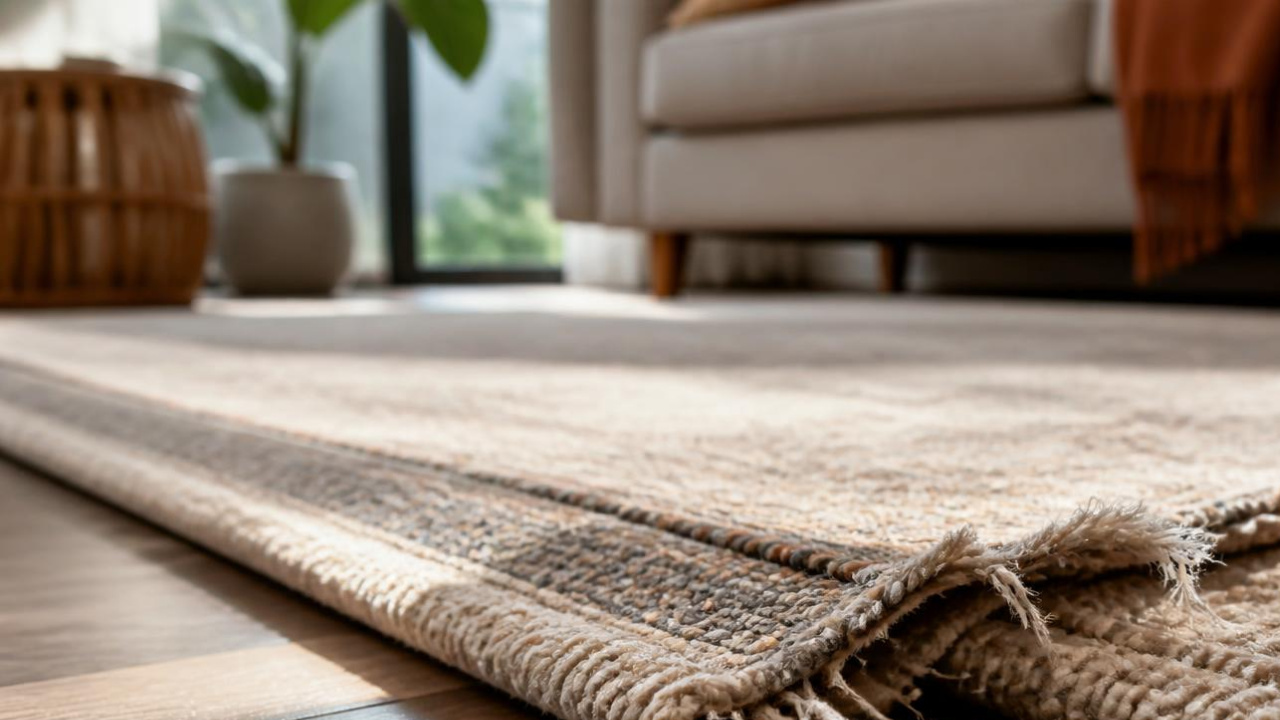
Americans send an enormous amount of carpet to the curb every year. The Carpet America Recovery Effort, the national industry group that tracks where old flooring ends up, estimated that about 5 billion pounds of carpet reached U.S. landfills in a single recent year. A lot of that carpet was replaced too late, and a lot of the replacements were only as good as the tear-out and the install underneath them. If your carpet in Conway is matting down, holding odors, or rippling across the room, the real question is not just whether to replace it, but how to get a floor that stays flat and clean for years instead of a few seasons.
We've been installing and repairing carpet in Conway and across the Grand Strand since 1986, so this guide is written the way we'd talk it through at the showroom counter: when replacement beats another cleaning, what happens to the old carpet and cushion, why a properly stretched install lasts, and how the coast's humidity shapes the floor you should choose.
When Is Carpet Worth Replacing Instead of Cleaning or Repairing?
Carpet is worth replacing once the damage is in the fibers or the backing rather than on the surface. A professional hot-water extraction can revive a carpet that is only dirty, and a re-stretch can pull out ripples caused by a loose install. Neither one brings back pile that has been crushed flat in the traffic lanes, fibers that have lost their twist and gone fuzzy, or a backing that has delaminated and started to ripple no matter how many times it is stretched. When the structure is gone, cleaning just gets you a clean version of a worn-out floor.
The clock matters too. The Carpet and Rug Institute (CRI), the trade body whose maintenance guidance the major carpet makers point to, recommends a professional deep clean every 12 to 18 months to pull the grit out of the pile before it does permanent damage. A carpet that has gone years without that treatment has usually absorbed enough embedded soil to wear from the inside, and at that point a cleaning buys months rather than years. If you find yourself scheduling cleanings to manage appearance instead of maintaining it, the carpet's telling you it's near the end.
What Are the Signs Your Carpet Needs to Be Replaced?
The reliable signs of a carpet past saving are matting, shading in the walkways, retained odor, and buckling that returns after a stretch. Matting and shading show up first in the hallways and in front of the couch, where the pile lies down and stops springing back. Odor that survives a professional cleaning usually means moisture and organic soil have reached the cushion below, which a surface clean cannot touch. And buckling that comes back after re-stretching points to a backing that has failed, which means replacement rather than another repair.
Allergies and indoor air are the quieter signal. Carpet holds dust, dander, and tracked-in pollen until it is vacuumed or cleaned out, and an old carpet with a saturated cushion becomes a reservoir the vacuum can no longer reach. If someone in the house has started reacting to a room that used to be fine, the floor is worth a hard look. None of these signs is subtle once you know to check for them, and two or three together usually settle the question.
Does the Old Carpet Cushion Get Replaced Too?
The cushion under the carpet, often called the pad, should be replaced along with the carpet almost every time. Cushion is the layer that absorbs foot traffic and protects the carpet backing, and by the time the carpet above it is worn out, the cushion has usually been compressed flat, has absorbed spills, and no longer springs back. Laying a fresh carpet over a dead cushion is how a new floor starts feeling thin and wearing unevenly within a year.
Cushion also carries part of the performance the carpet warranty depends on, because a pad that is too soft or too thick for the carpet lets the backing flex and break down. Matching the cushion to the carpet is part of the job we quote, and it is one of the places a rock-bottom install cuts a corner you cannot see until it fails. When you price a replacement, make sure the number includes new cushion sized to the carpet, and be wary of any quote that reuses what is already down.
What Happens on Carpet Tear-Out Day?
Tear-out is the day the old carpet, the cushion, and the tack strips come up and the subfloor gets its first honest look in years. Our crews pull the carpet and cushion, check and reset the tackless strips around the perimeter, and haul the old material away. Removal and disposal of the old flooring is part of what we handle. Old carpet is bulky, often damp along the coast, and awkward to move, and getting it out of the house is half the reason people stop doing this job themselves. Old carpet is also a real waste stream: since 2002, CARE says its members have kept more than 4.6 billion pounds of it out of landfills through recycling and reuse. Horry County's bulk-waste rules limit what you can leave at the curb and when, so having the crew that installs also take the old floor off your hands saves you a second headache.
Tear-out is also the moment problems hide. Lifting an old carpet is the best chance you'll get to see water staining, soft spots, squeaks, or an uneven slab before a new floor covers them for the next decade. A sound subfloor is what a lasting installation is built on, and we wrote about why the subfloor makes or breaks a floor on the Grand Strand, where slab moisture and humidity give a bad subfloor plenty of ways to telegraph through. If tear-out uncovers a problem, fixing it then, while everything is open, costs a fraction of fixing it later.
Why a Power-Stretched Install Outlasts a Discount Job
A carpet installed with a power stretcher stays flat for years, and one installed with only a knee kicker usually doesn't. The CRI installation standard for homes, CRI 105, calls for stretch-in carpet to be power-stretched during installation, and it sets a minimum stretch of about 1 percent in both length and width so the floor holds its tension under everyday traffic. On runs longer than 30 feet the same standard asks for heavier architectural tack strip, roughly 1 3/4 inches wide with three rows of pins, so the carpet has enough grip to hold that much tension. A power stretcher is a long tool that braces against the far wall and pulls the whole carpet tight across the room; a knee kicker only nudges the edge and can't reach that tension. Most of the ripples we're called out to fix trace back to an install that skipped the power stretcher to save time.
Seams and edges are the other place a proper install shows its worth. A cut edge that is not sealed will fray, and seams that are not hot-melted and rolled will show and peak over time. These are the details a same-day discount crew rushes and a careful installer doesn't, and they're invisible on the day the job looks finished. When you compare quotes, the question worth asking is not only the price of the carpet but whether the crew power-stretches and seals seams to the CRI standard, because that's the difference between a floor that looks good for a decade and one that ripples by the second summer.
How Coastal Humidity in Horry County Affects a New Carpet
Humidity along the Grand Strand puts stress on carpet that inland homes never see, so the fiber and the install both have to account for it. Myrtle Beach averages around 73 percent relative humidity across the year, and mornings routinely sit near 85 percent before the air dries out through the afternoon, according to long-term readings from the region's first-order weather station. That daily swing, plus the salt air and the sand that gets tracked in, is hard on a soft-surface floor.
Humidity works on carpet two ways, and both argue for choosing carefully. Damp air keeps spills and tracked-in moisture in the pile longer, which feeds odor and, in a poorly ventilated room, mildew in the cushion below. It also lets carpet expand and go slightly slack, which is one more reason a coastal install has to be power-stretched tight to begin with. Synthetic fibers like nylon and polyester handle this environment far better than natural fibers, and a lower-pile, denser construction dries faster and shows traffic less. When you are ready to compare constructions, our showroom carries a wide range of carpet built for coastal homes, and our guide to choosing carpet walks through fiber, twist, and density in plain terms.
How to Make Your New Carpet Last
A new carpet lasts longest when you keep the grit out of it and clean it on a schedule. Sand and soil act like sandpaper deep in the pile, cutting fibers every time they are stepped on, which is why the single most effective thing you can do on the coast is stop the grit at the door. The CRI recommends mats outside and in, taking shoes off where you can, and vacuuming at least once a week, more in the traffic lanes. A good vacuum with strong suction does more for a carpet's life than any product you spray on it.
The deep clean is the other half. Following the CRI's 12-to-18-month professional extraction schedule keeps embedded soil from grinding the fibers down and helps the carpet meet the appearance-retention terms most manufacturers set in their warranties. Spills get blotted, never rubbed, and handled quickly before they reach the cushion. None of this is complicated, and a carpet that gets it will look presentable years longer than an identical one that does not.
Repair, Clean, or Replace: A Quick Comparison
| Situation | Best move | Why |
|---|---|---|
| Carpet is dirty but pile is intact | Professional hot-water extraction | Cleaning restores a structurally sound carpet |
| Ripples or wrinkles, backing still bonded | Power re-stretch | The install loosened; the carpet is fine |
| Matting, shading, lost twist in walkways | Replace | Fiber structure is gone and will not recover |
| Odor that survives cleaning | Replace carpet and cushion | Moisture has reached the cushion below |
| Buckling returns after a re-stretch | Replace | The backing has delaminated |
Questions We Get About Replacing Carpet
How long does it take to replace carpet in a house?
Most whole-home carpet replacements are a one-day job once the carpet is in, though a large house or a lot of stairs can run into a second day. The bigger variable is lead time on the carpet itself, since a special order takes longer to arrive than something from our in-stock selection. We give you a realistic schedule when we measure, including tear-out, disposal, and the install.
Do I have to move the furniture myself?
You can move it yourself to save on the quote, or we can move it as part of the job. Either way, clearing breakables and small items ahead of time speeds up the crew. Tell us what you would like to handle when we come out to measure so the estimate reflects it.
Can new carpet go over my existing carpet?
No, new carpet should never go over old carpet. The old cushion is compressed and the old carpet hides whatever is happening on the subfloor, so laying new over old produces a soft, uneven floor that wears fast and voids most manufacturer warranties. The old carpet and cushion come out first, every time.
Is it worth replacing carpet with hard flooring instead?
Sometimes, and it depends on the room. Many Grand Strand homeowners keep carpet in bedrooms for warmth and quiet while moving to waterproof flooring in the wetter, higher-traffic parts of the house. When you are weighing that choice, we can show you both at the showroom and price them side by side so the decision is based on your rooms rather than a general rule.
Ready to Replace Your Carpet in Conway?
Replacing carpet is one of the fastest ways to make a whole house feel new again, and the result comes down to the tear-out, the cushion, and a proper stretched install as much as the carpet you pick. When you are ready, request a free in-home estimate and we will measure the rooms, look at what is under the old floor, and talk through the carpet and cushion that fit your home and your budget. We handle the removal, the disposal, and the installation, so the only thing left for you to do is enjoy the new floor.


